Viewing archives for MEC Fellows

Professor Pascal Menoret (Magdalen College)

Current Projects:

My previous work looked at collective action in relation to the built environment. In Joyriding in Riyadh I studied the making of the Saudi capital from the conflicted points of view of urban planners, developers, and car drifters. In Graveyard of Clerics I analyzed the Saudi Islamic movement in the suburban context in which it emerged. My current research sits at the intersection of ecological anthropology and critical race theory. In one of my new projects I look at the lifeworlds of an invasive free floating flower, Eichhornia Crassipes aka Water Hyacinth or Ward al-Nil (Nile rose), as it drifts through the Egyptian waterscape. By studying the alliances between Water Hyacinth and other plant and animal species, including our own, I propose to rethink the contribution of invasives to the landscape. In another project I analyze the role of the enslaved in the making of the Saudi state in the 19th century, based on a careful reading of several Central Arabian chronicles, including Uthman Ibn Bishr’s Sign of Glory in Najdi History.

Biography:

I joined the University in 2024 from the Center for Economic, Legal, and Social Studies and Documentation (CEDEJ) in Cairo, which I directed for two years. Before moving to Egypt, I was an associate professor of anthropology at Brandeis University and an assistant professor of Middle East Studies at New York University Abu Dhabi. And before that, I was a Harvard Academy Scholar and a postdoctoral fellow at Princeton University. I received my PhD in history from the University of Paris-1 and my BA in philosophy from the University of Aix-Marseille.

Research Interests:

Environmental anthropology, infrastructure studies, critical race theory, urban studies.

Recent Publications:

2022 “ The Petroptimist: Dancing in the Ruins of Fossil Capitalism.” In Agn ès Deboulet and Waleed Mansour (eds.), Middle Eastern Cities in a Time of Climate Crisis (CEDEJ).

2020 Graveyard of Clerics: Everyday Activism in Saudi Arabia (Stanford University Press).

2019 “ Learning from Riyadh: Automobility, Joyriding, and Politics,” Comparative Studies of South Asia, Africa, and the Middle East 39-1, 131-142.

2017 “ The Suburbanization of Islamic Activism in Saudi Arabia.” City and Society 29-1, 162-186.

2014 Joyriding in Riyadh: Oil, Urbanism, and Road Revolt (Cambridge University Press). 

2014 Cities in the Arabian Peninsula (ed.). Special issue of City: Analysis of Urban Trends, Culture, Theory, Policy, Action 18-6, 698-770.

2014 The Abu Dhabi Guide: Modern Architecture, 1968-1992/Dalil Abu Dhabi: al-‘imara al-hadathiyya, 1968-1992 (ed.) (NYU Abu Dhabi/FIND).
Professor Michael Willis

Prof Michael J. Willis is Professor of North African Politics and King Mohammed VI Fellow in Moroccan and Mediterranean Studies. His research interests focus on the politics, modern history and international relations of the central Maghreb states (Algeria, Tunisia and Morocco). Before joining St Antony’s in 2004, he taught politics at Al Akhawayn University in Ifrane, Morocco for seven years.

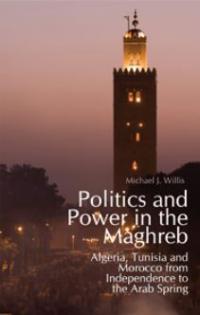
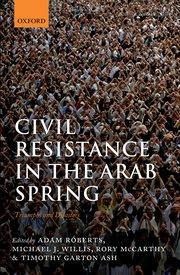
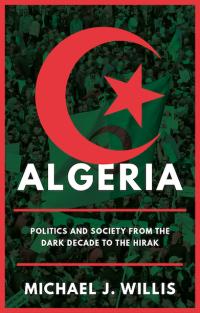
He is the author of Algeria: Politics and Society from the Dark Decade to the Hirak (Hurst, 2022); Politics and Power in the Maghreb: Algeria, Tunisia and Morocco from Independence to the Arab Spring (Hurst and Oxford University Press, 2012) and The Islamist Challenge in Algeria: A Political History (Ithaca and New York University Press, 1997) and co-editor of Civil Resistance in the Arab Spring: Triumphs and Disasters (Oxford University Press, 2015).

He was Director of the Middle East Centre at St Antony’s 2011-2014 and 2021-2022.

Selected Publications: 

Book Chapters

Journal Articles

Professor Eugene Rogan

Eugene Rogan is a Professor of Modern Middle Eastern History at St Antony’s College, University of Oxford. He has a B.A. in economics from Columbia, and an M.A. and PhD in Middle Eastern history from Harvard. He taught at Boston College and Sarah Lawrence College before taking up his post in Oxford in 1991, where he teaches the modern history of the Middle East to both undergraduates and graduates, as well as providing DPhil supervision. He was elected a Fellow of the British Academy in 2017.

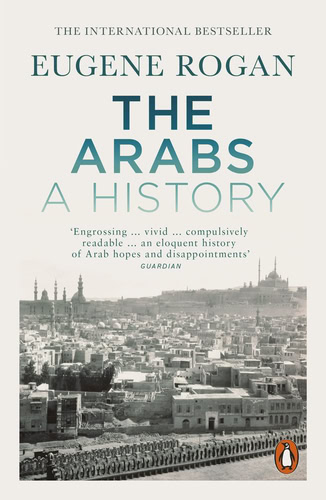
He is author of The Arabs: A History (Penguin, 2009, 3rd edition 2018), which has been translated into 18 languages and was named one of the best books of 2009 by The Economist, The Financial Times, and The Atlantic Monthly. His earlier works include Frontiers of the State in the Late Ottoman Empire (Cambridge University Press, 1999), for which he received the Albert Hourani Book Award of the Middle East Studies Association of North America and the Fuad Köprülü Prize of the Turkish Studies Association; The War for Palestine: Rewriting the History of 1948 (Cambridge University Press, 2001, second edition 2007, with Avi Shlaim), which has been published in Arabic, French, Turkish and Italian editions; and Outside In: On the Margins of the Modern Middle East (I.B. Tauris, 2002). 

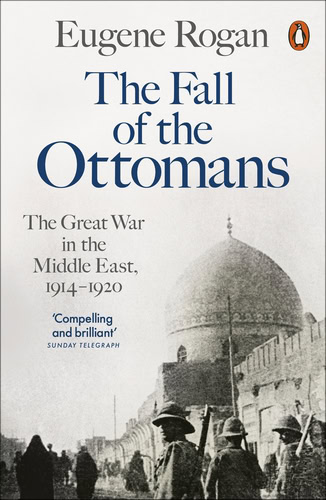
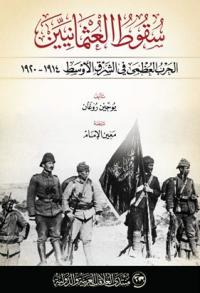
His newest book, The Fall of the Ottomans: The Great War in the Middle East, 1914-1920, was published in February 2015.

Recent Completed Doctoral Theses

Professor Laurent Mignon

Professor Neil Ketchley

I am Professor of Politics in the Department of Politics and International Relations and the Oxford School of Global and Area Studies.

My research focuses on social movements and collective protest in the Arabic-speaking Middle East and North Africa.

My book, Egypt in a Time of Revolution, won the Charles Tilly Distinguished Contribution to Scholarship Award. Results of my research have appeared in journals such as the American Political Science Review, the Journal of Politics, and Political Analysis.

Professor Raihan Ismail

Raihan Ismail is the His Highness Sheikh Hamad Bin Khalifa Al-Thani Professor of Contemporary Islamic Studies. She was elected as a Corresponding Fellow to the Australian Academy of the Humanities in 2024.

Raihan’s research interests include political Islam, intra-Muslim relations, and the intertwining nature of religion and politics in the Middle East. She convenes the Contemporary Islamic Studies program at the Middle East Centre, St Antony’s College.

Before moving to Oxford, Raihan was based at the Australian National University, teaching courses on Islam, the Modern Middle East, intra-Muslim relations, Gender and Culture in the Middle East, and Muslim Politics. She was the co-recipient of the 2018 Max Crawford Medal, awarded by the Australian Academy of the Humanities for ‘outstanding achievement in the humanities by an early-career scholar’. She also delivered the 8th Hancock Lecture for the Academy, titled Hybrid Civilisation or the Clash of Civilisations: Rethinking the Muslim Other.

From 2019 to 2022, Raihan was an Australian Research Council Fellow (DECRA). She was the Goldman Faculty Leave Fellow at Brandeis University for the 2022-2023 academic year. 

Raihan has been the co-convenor (2015-2018) and convenor (2019-2020) of the Political Islam seminar series for various Australian Commonwealth government agencies. She has also delivered consultancies for the Australian Attorney General’s Department and Departments of Defence and Foreign Affairs.

She is a regular commentator in international media on Islam and Middle East politics. She shares her research expertise on various media outlets, and has given numerous interviews including on Voice of America, BBC World, BBC Arabic, ABC TV and ABC Radio National. She has appeared as a panellist on the Australian Broadcasting Corporation’s Q&A program. In 2019, she was placed in the ABC’s Top 5 Media Residency Program for humanities scholars in Australia. 

She is the author of Saudi Clerics and Shia Islam (Oxford University Press, 2016) and Rethinking Salafism: The Transnational Networks of Salafi ‘Ulama in Egypt, Kuwait and Saudi Arabia (Oxford University Press, 2021). Rethinking Salafism is the 2024 winner of the UK’s Muslim World Book Award.

She has a Bachelor’s Degree in Political Science, with a minor in Islamic Studies, and a Masters in International Relations from the International Islamic University of Malaysia, and a PhD from the ANU.

Professor Walter Armbrust

Professor Walter Armbrust is a Hourani Fellow and Professor in Modern Middle Eastern Studies. He is a cultural anthropologist, and author of Mass Culture and Modernism in Egypt (1996); Martyrs and Tricksters: An Ethnography of the Egyptian Revolution (2019); and various other works focusing on popular culture, politics and mass media in Egypt. He is editor of Mass Mediations: New Approaches to Popular Culture in the Middle East and Beyond (2000).

Dr Maryam Alemzadeh

Maryam Alemzadeh is Associate Professor in History and Politics of Iran at the Oxford School of Global and Area Studies (OSGA) and a Middle East Centre Fellow. She holds a Ph.D in sociology from the University of Chicago (2018). Before joining Oxford, she was a Junior Research Fellow at the Crown Center for Middle East Studies at Brandeis University, and a Postdoctoral Research Associate at Princeton University’s Sharmin and Bijan Mossavar-Rahmani Center for Iran and Persian Gulf Studies.

Maryam’s research interests include revolutions, state building, militias and militaries, and modern Iran, and how to study these phenomena by looking at individual people and actions that create them bit by bit. Currently she is working on her book manuscript titled Iran’s Revolutionary Guards: A History. The book is based on first-hand research on the Revolutionary Guards’ first generation of commanders, volunteers, supporters, and critics, as they struggled to find order in chaos on a day-to-day basis. To learn more about Maryam’s work, you can check her Oxford School of Global and Area Studies webpage: Professor Maryam Alemzadeh | Oxford School of Global and Area Studies.