
The Founding of St Antony’s College Boat Club
Geoffrey Underhill (DPhil Politics, 1980)
‘When I think back, with the possible exception of forty-years of university teaching, founding SACBC was my most important legacy. It remains the most important student association and activity in the college, and has made more young people happy, fit, and frequently rather triumphant, friends for life, than anything else I ever did.’
Read Geoffrey’s fantastic full account of the foundation of St Antony’s College Boat Club here.

St Antony’s in the 1980s
Susan McRae (DPhil Sociology, 1980)
I was 33 years old when I arrived in Oxford in September 1980; one year older than when I was offered a place at St Antony’s – a delay occasioned by the then Prime Minister, Margaret Thatcher, raising international student fees to a level I couldn’t afford without help, which in time was provided by a Commonwealth Scholarship. I had initially named Nuffield College – the only College I’d heard of – as my preference. They turned me down. My application was passed ‘down the line’ and I was accepted by St Antony’s College.
It wasn’t long after my arrival in Oxford that I realised how lucky I’d been that Nuffield had sent me on my way. Nuffield students at the time were mostly British public-school boys in their early twenties – an admissions policy that soon changed – and a Canadian woman in her thirties didn’t quite fit in. St Antony’s College, by contrast, was created to house international students with varied backgrounds; in other words, people like me. Within a few short months I had friends from Latin America, Israel, Iran, Egypt, Switzerland, the USA and Britain; friends in their twenties and thirties, and even one or two in their forties.
And what friends they were – we had mini-high tables in each other’s college rooms, took part in a talent show, shared birthdays, dressed up for a costume party, and danced at a Summer Ball in June, with tickets costing less than half that at a typical Undergrad college!
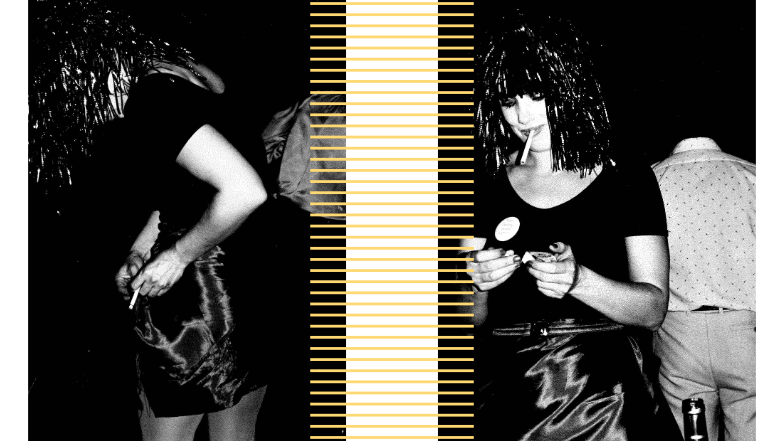
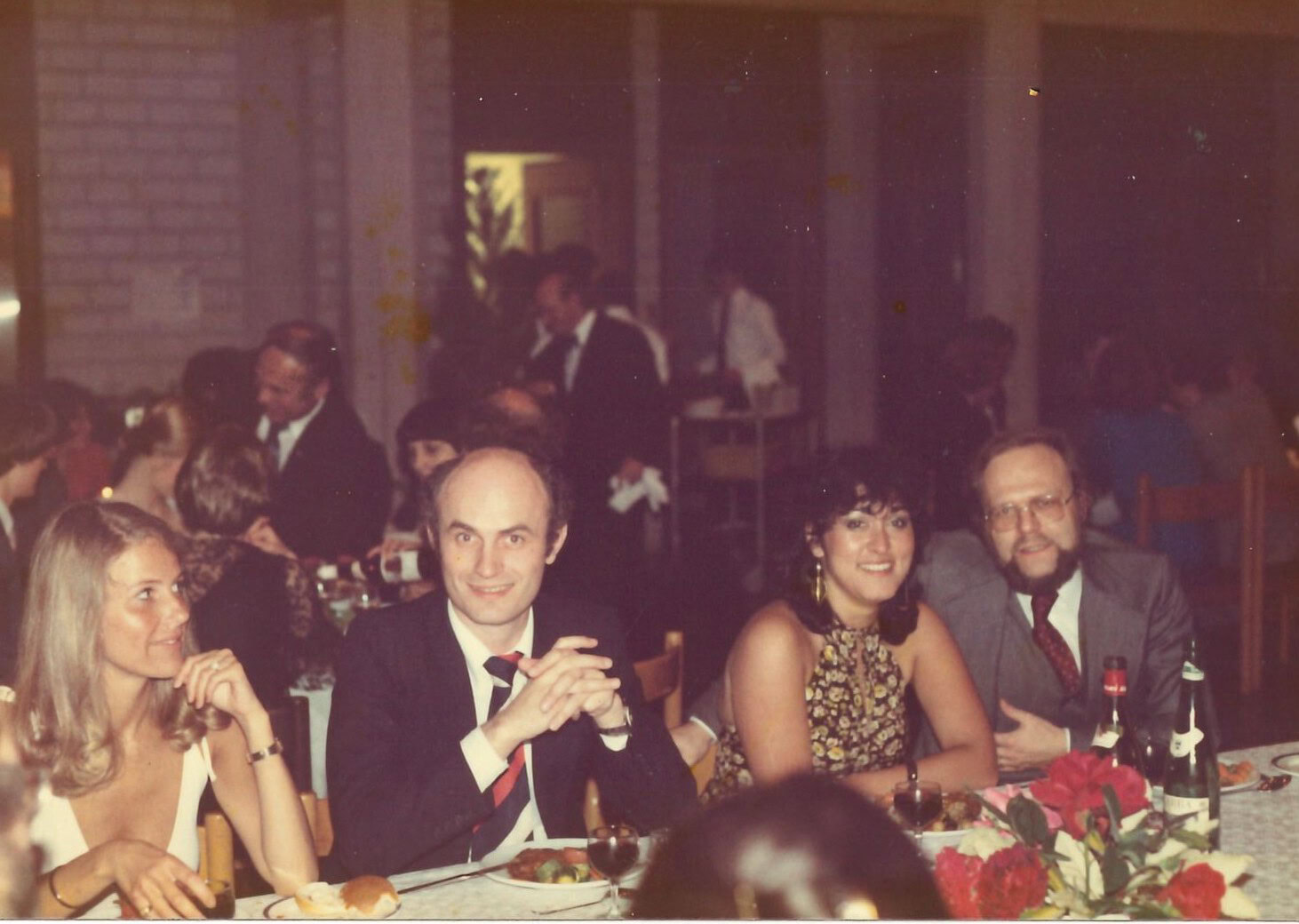
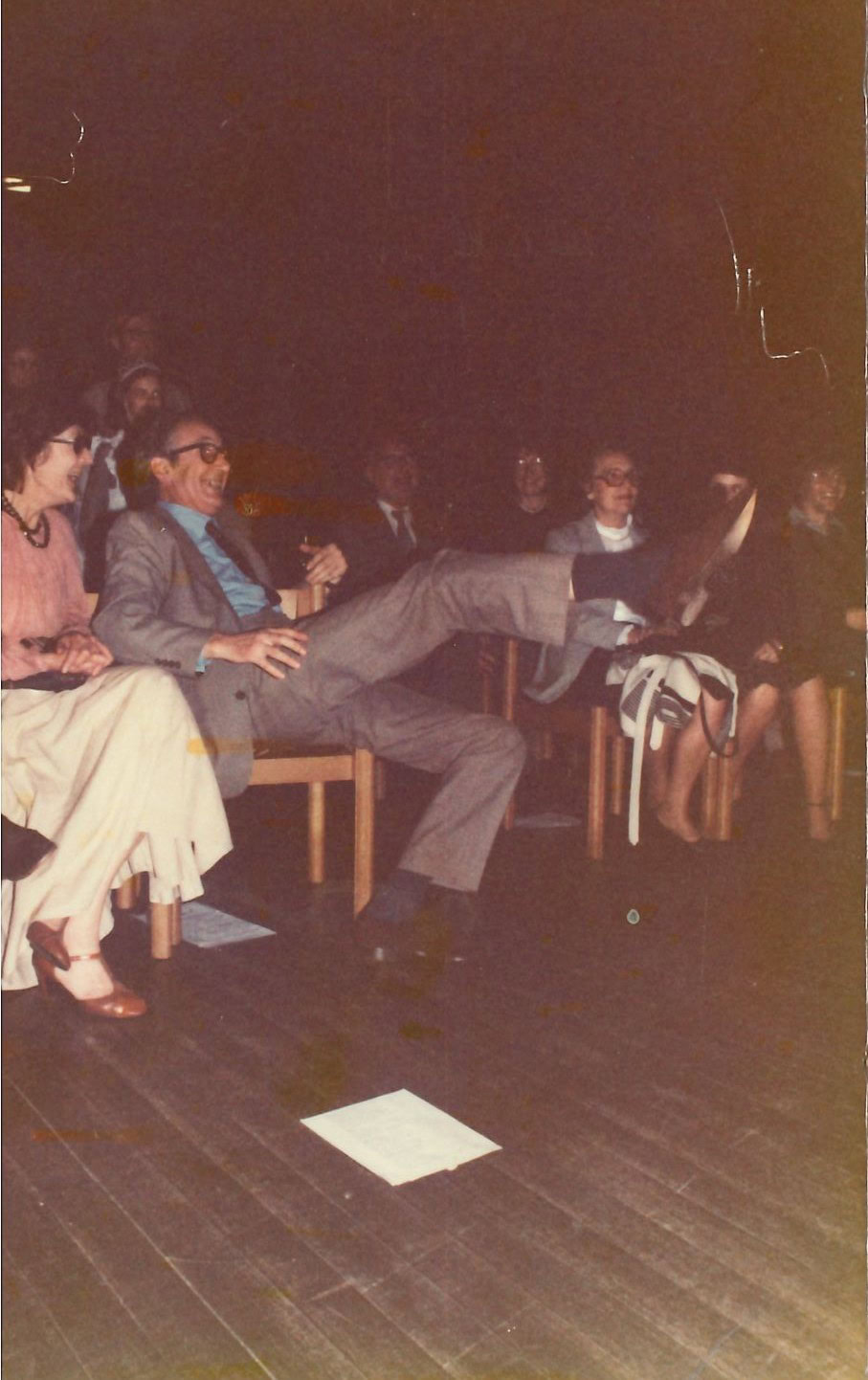
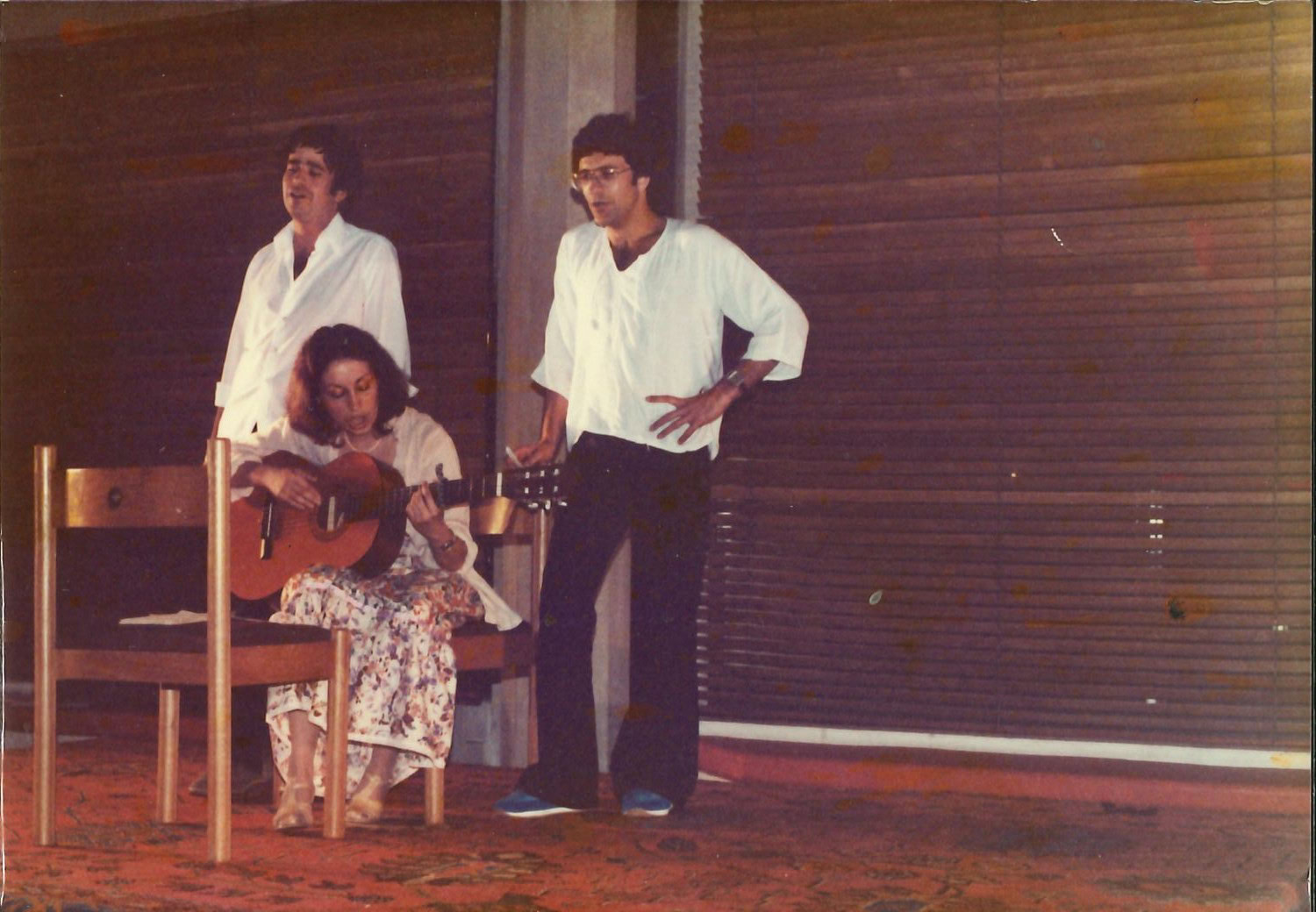
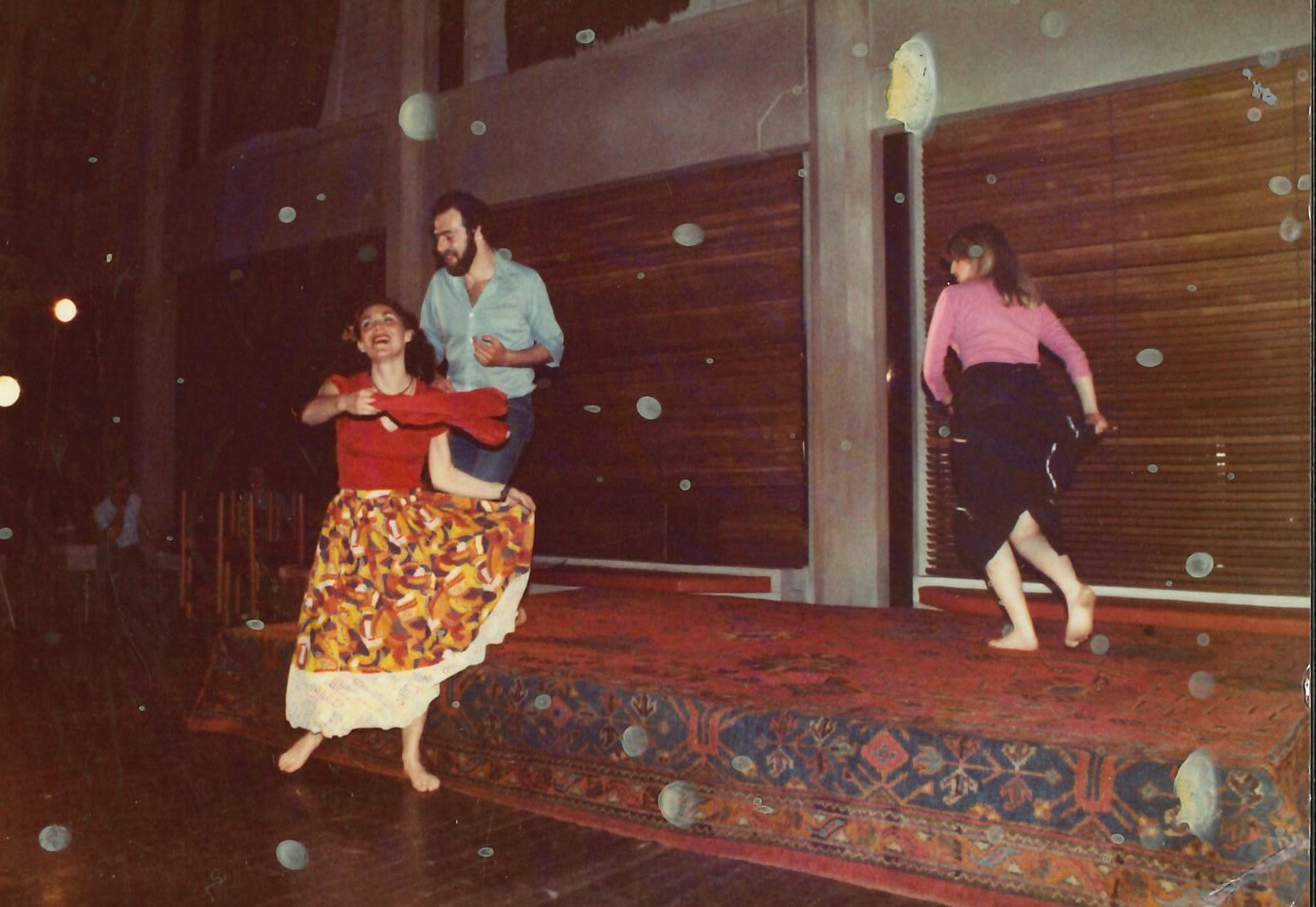
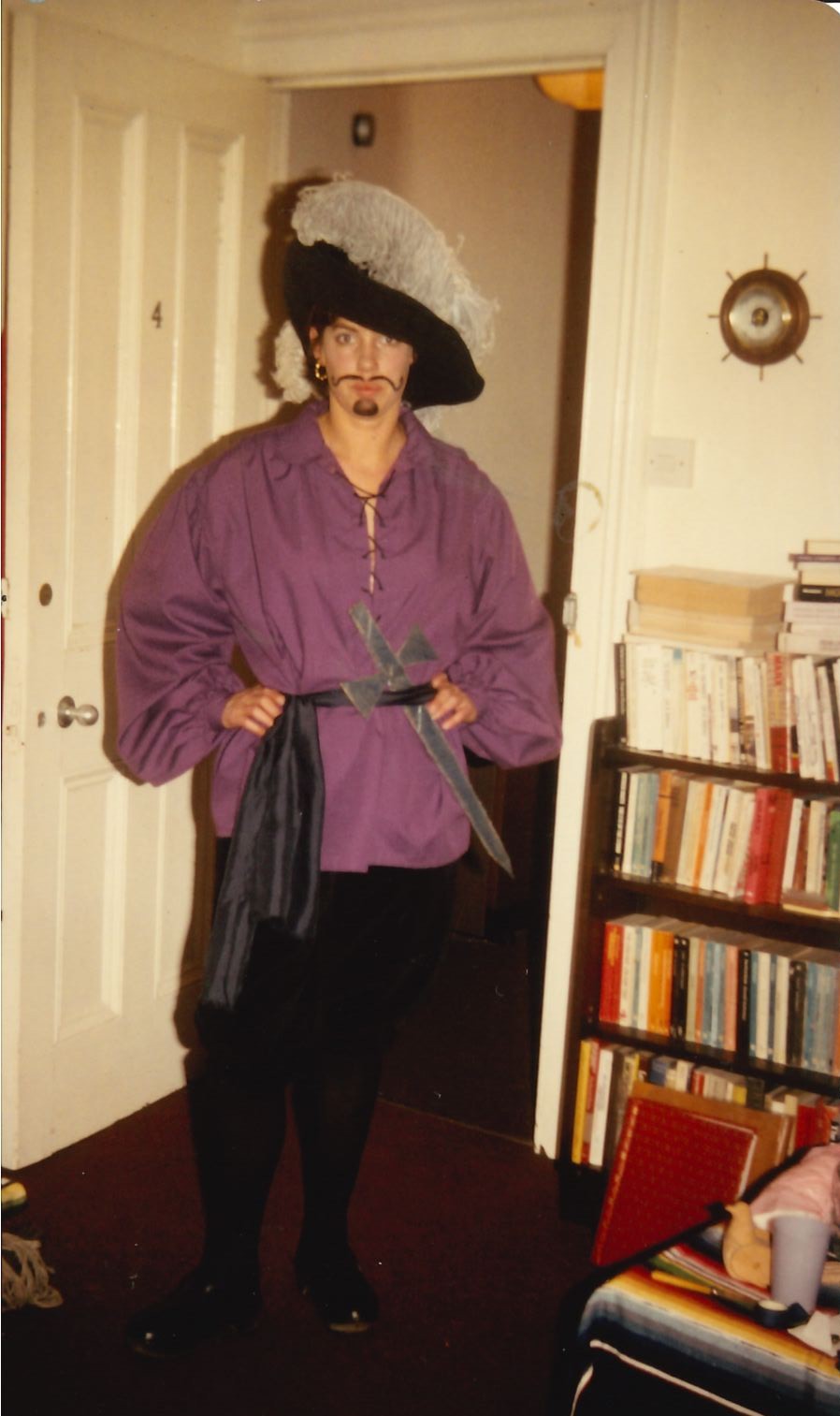
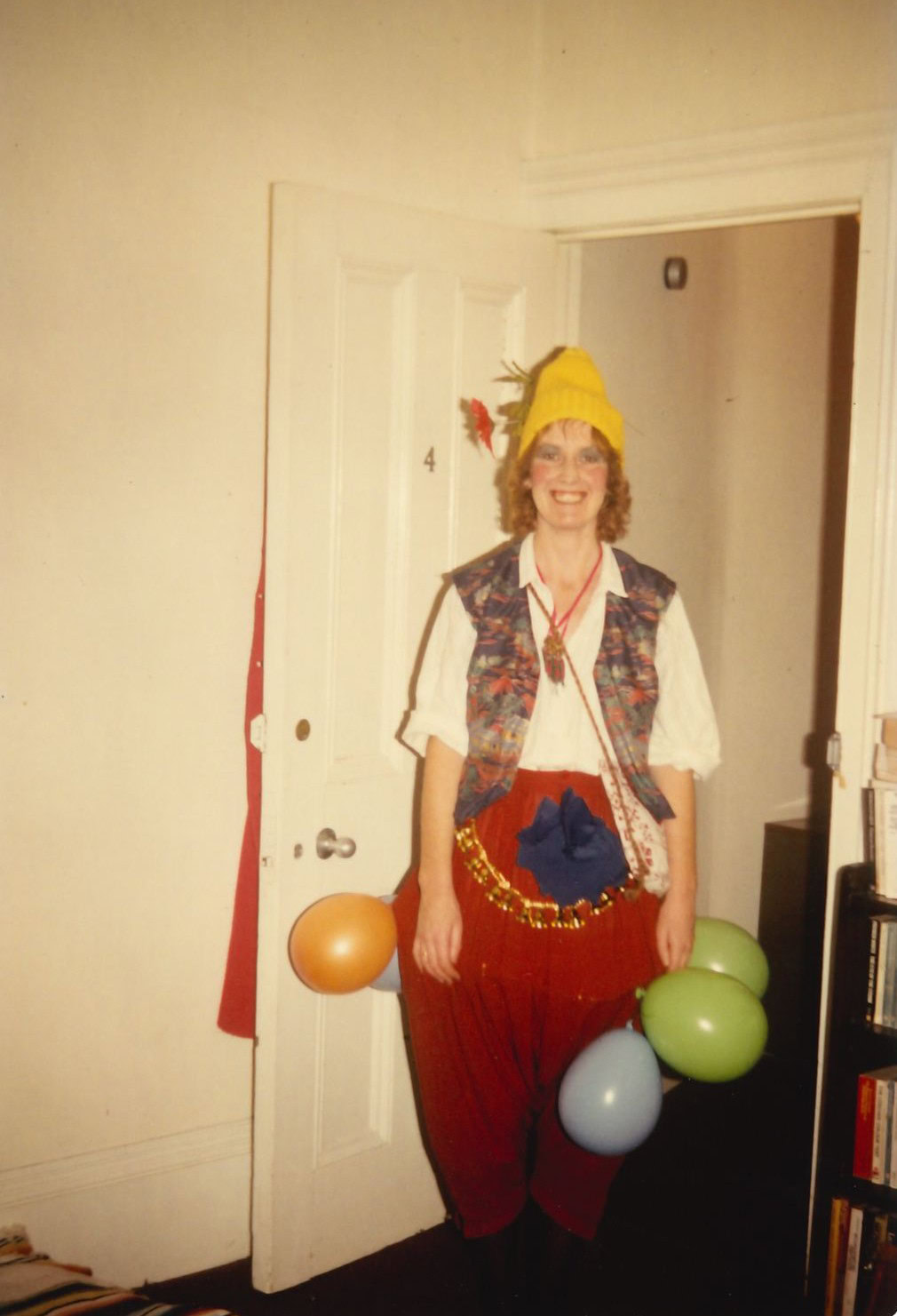
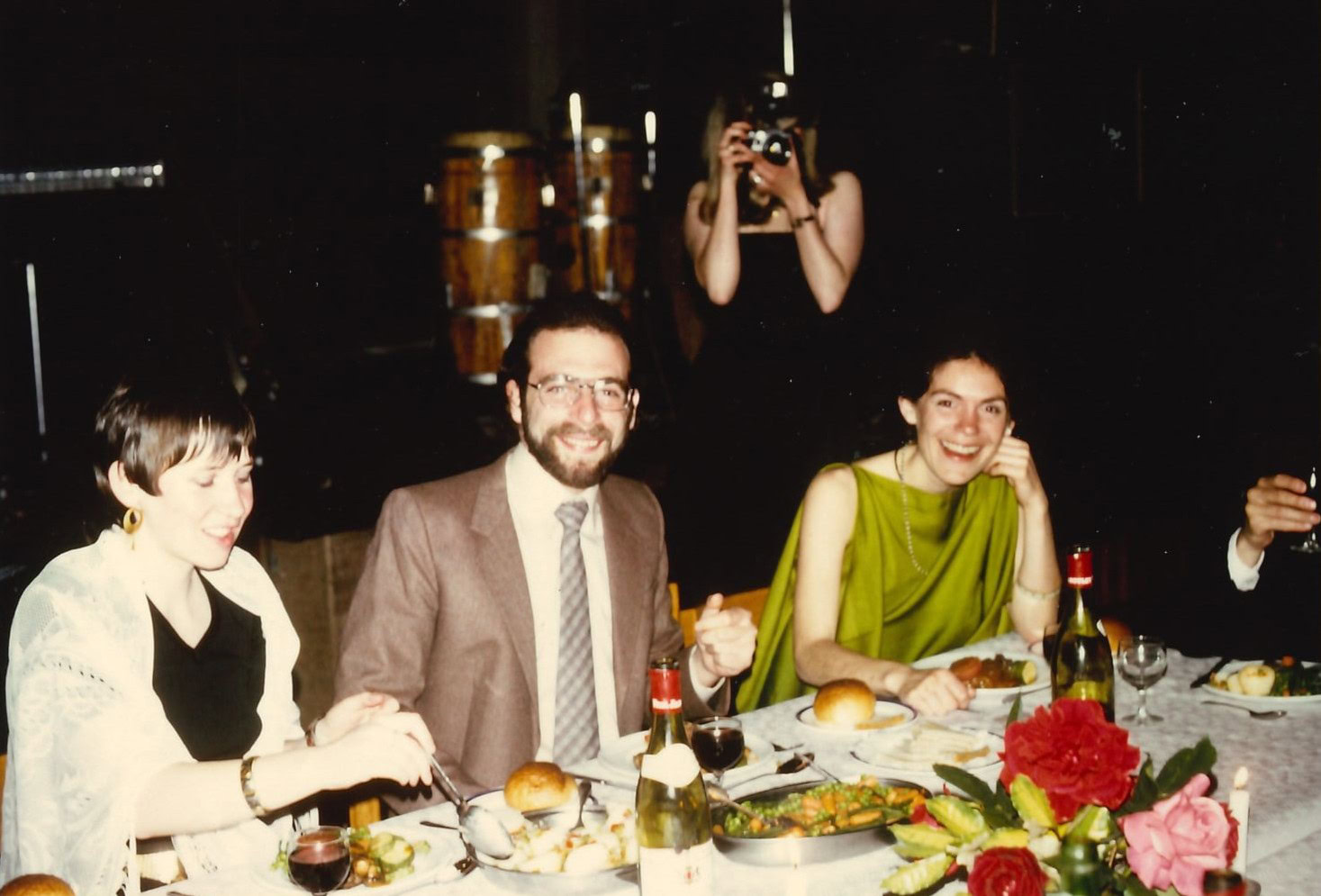
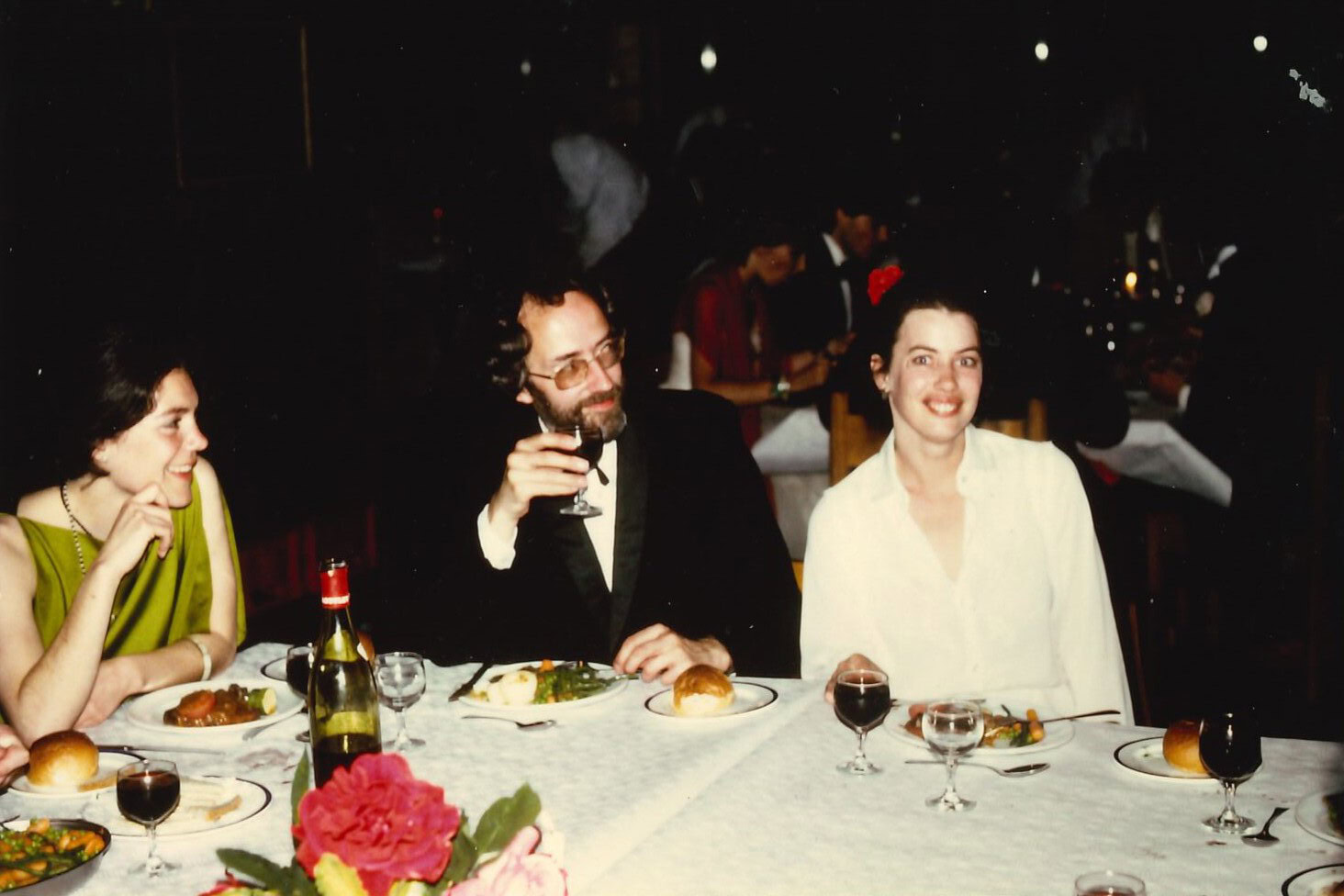
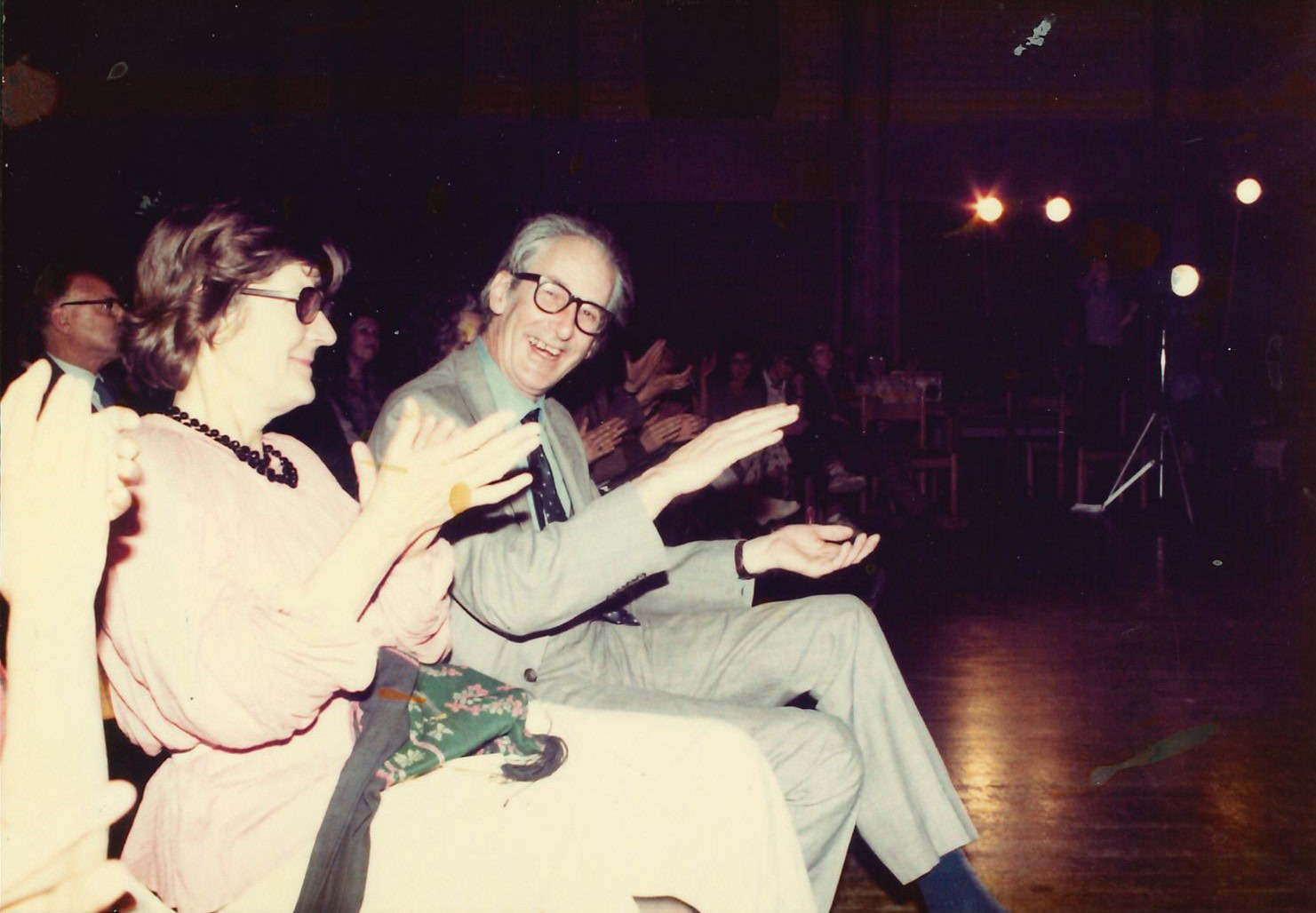
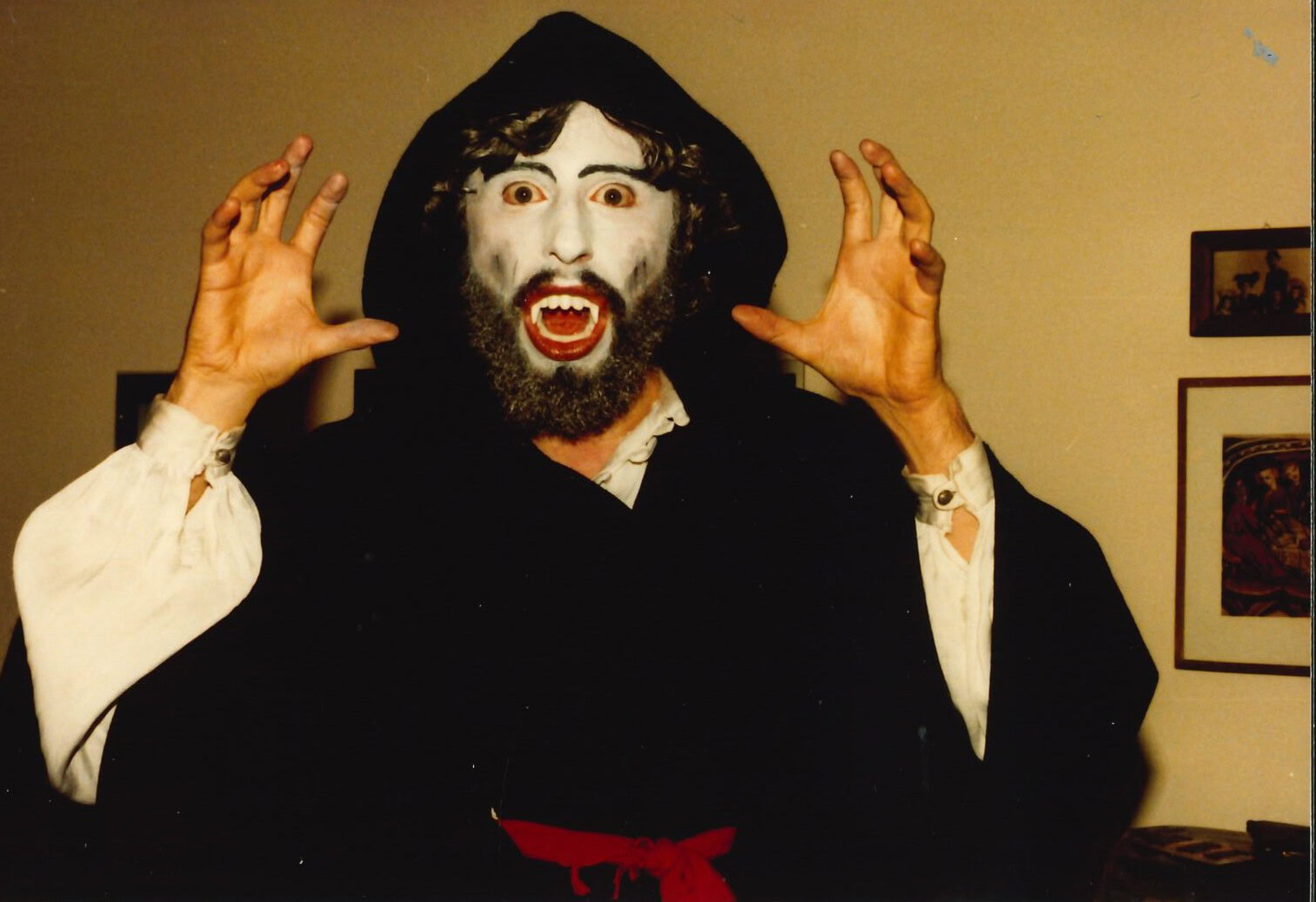
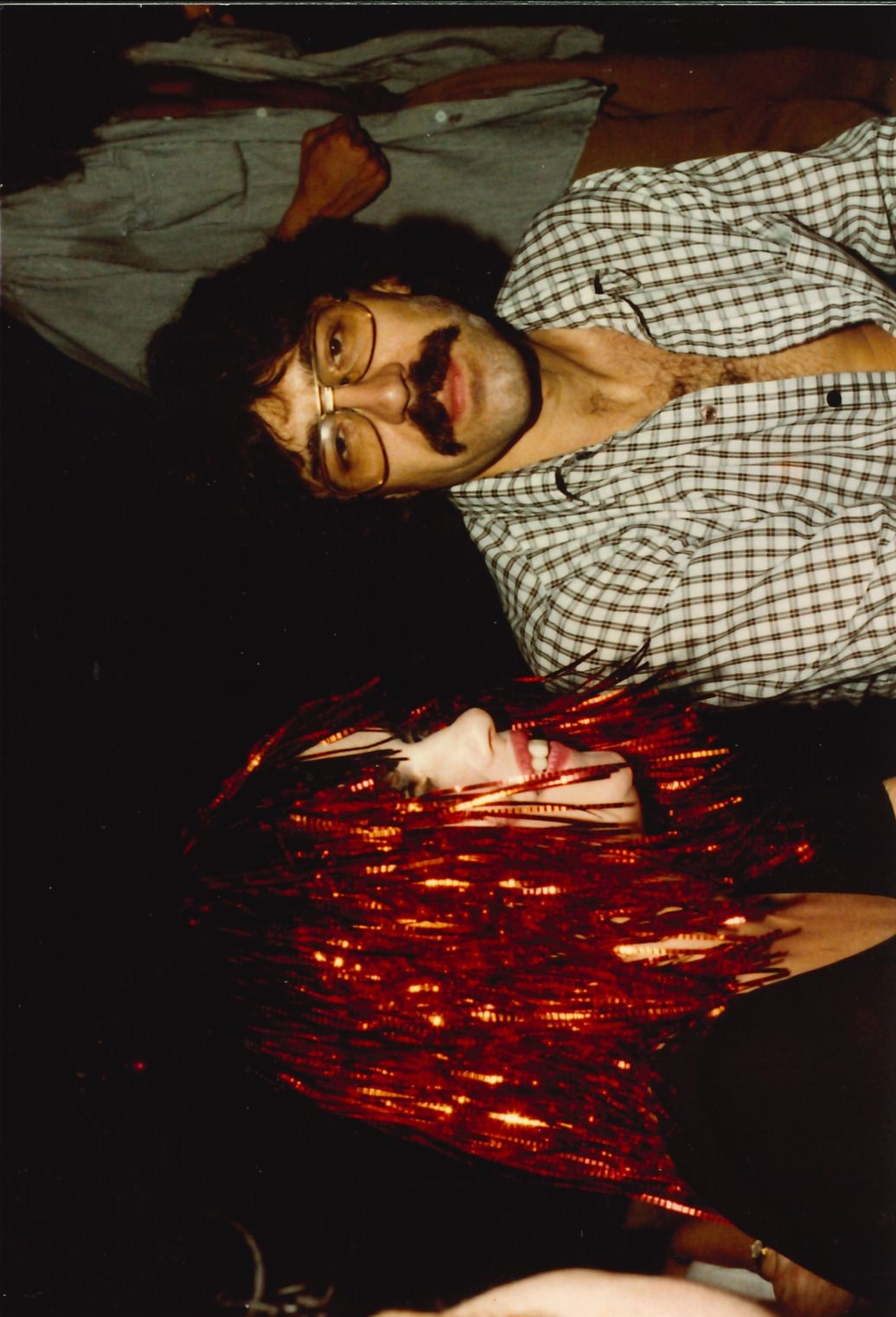
In my second year, 1981-82, I became JCR President, a time which saw the introduction of vegetarian meal choices, the first-ever College Sports Day and BBQ, a bigger and better Talent Show, and the first meeting of the Revolutionary Feminist Cell.
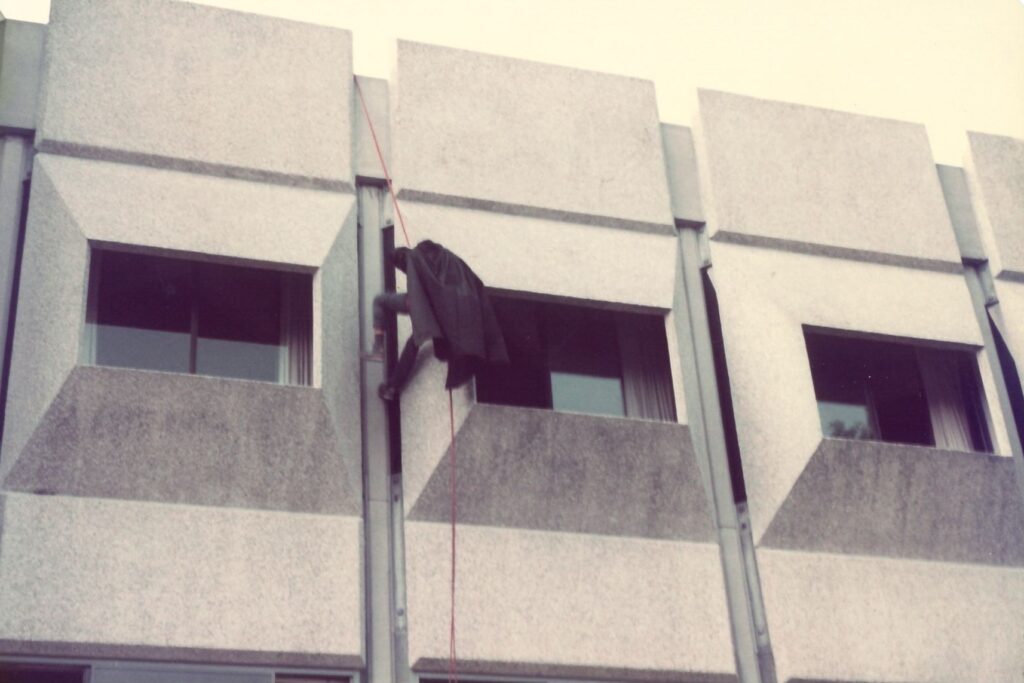
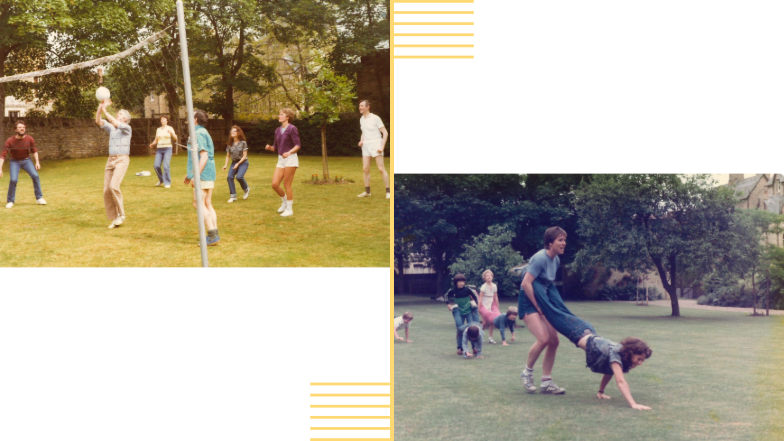
The Sports Day, attended by staff and students alike, was a great success with excellent food cooked by Chef Mark Walker, a volleyball contest, wheelbarrow and three-legged races – maybe others, I cannot remember – and the unexpected, stunning, abseiling from the roof of the Hilda Besse Building, clad in full academic dress, of Adam Roberts, then Alastair Buchan Reader, soon-to-be Montague Burton Professor, of International Relations. Great fun!
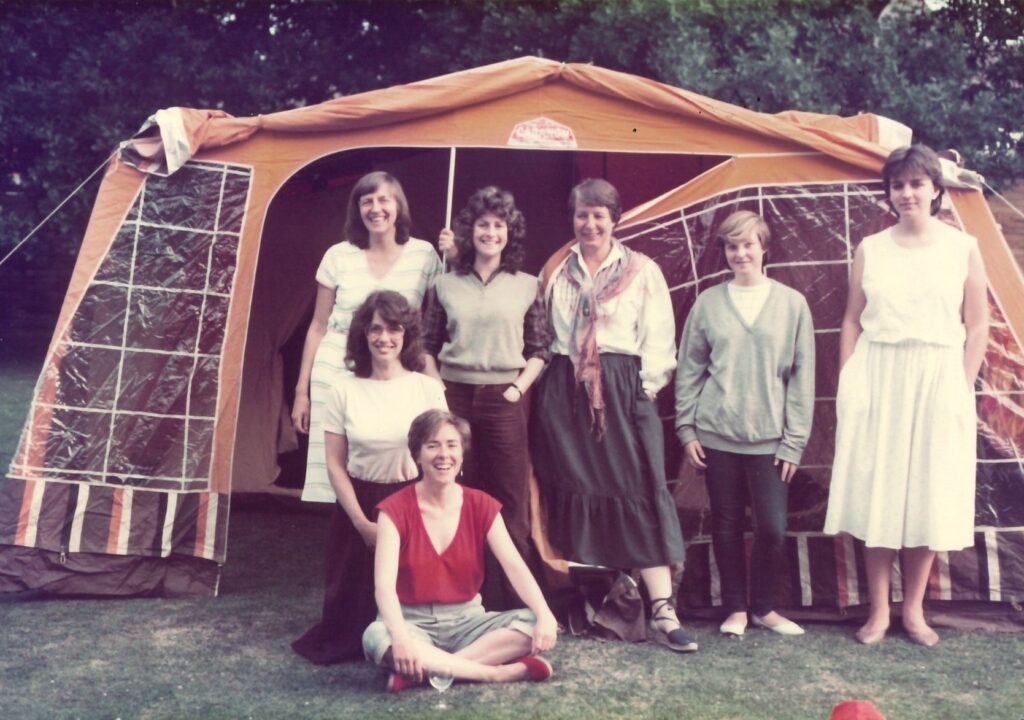
The Revolutionary Feminist Cell, although we did not know it at the time, referenced an event held on 13 December 1973 when six militant young women gathered together to dine in the College’s Clock Room, no longer prepared to sit at home whilst their husbands dined and wined in College without them. The 1980s version comprised three College Fellows (the only women Fellows at the time; one of whom, Rosemary Thorp, lived too far away to join in every time but hosted us overnight in Great Malvern); one visiting Senior Associate Member; two students; and one staff member. In rotation, one woman cooked, the other five brought wine! In time, it was deemed wise to convert one of the five bottles of wine into a second dessert. There was also a joint meal between the Revolutionary Feminist Cell and the Apathetics – an almost-imaginary all-male College Fellows dining club – but the food wasn’t nearly as good!
Adam Roberts (SCR 1981-1986, Governing Body Fellow 1981-1986, Honorary Fellow 1985, 2005)
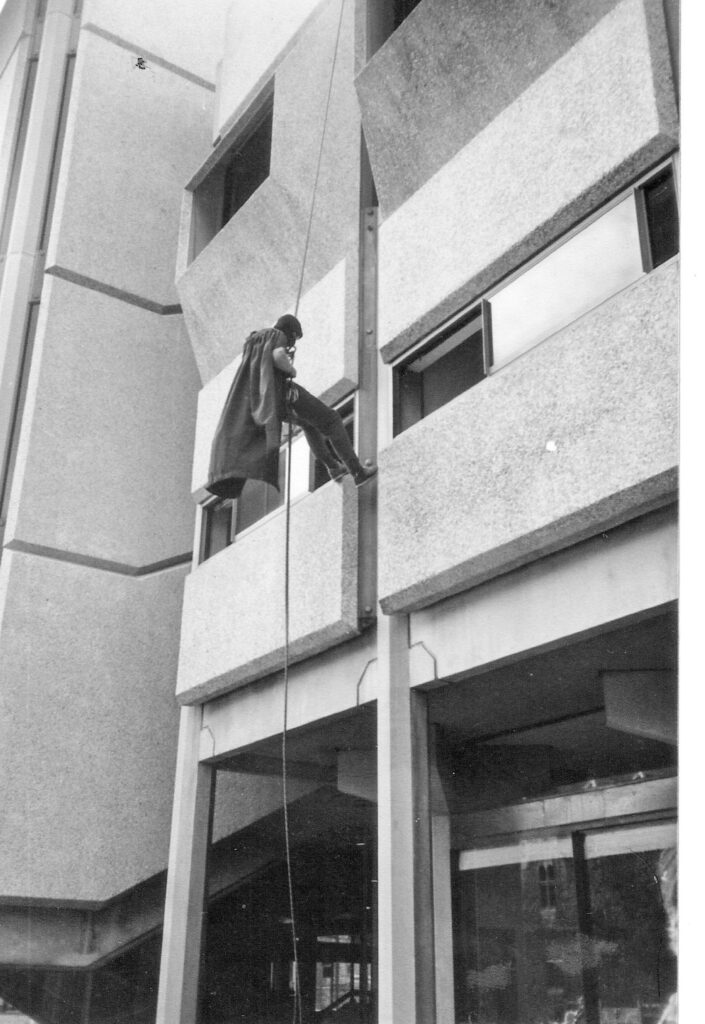
My abseil down the Besse Building on 16 June 1984, which was a Sports Day. It shows me, unusually, wearing a gown.
Invited by Raymond Carr
Jürgen von Kruedener (Academic Visitor, 1986)
I took this photo in June 1987, at the end of Raymond Carr’s tenure as warden (between Fox hunting – 2nd ed. – and retirement, so to speak) and at the end of my stay as a Visiting Fellow. It shows him and Sara enjoying an apéritif in the Buttery before a private dinner with friends and companions as well as the new chancellor Roy Jenkins.
Raymond Carr invited me too because he felt a bit guilty; he wanted to make amends. As usual, as a so-called Volkswagen Professor, I was supposed to stay at the European Studies Centre. But when I arrived in Oxford, he had already taken the apartment in question for himself, and I was forced to find private accommodations outside St Antony’s.
An enlightening & enjoyable experience
Professor (FRCS) Fred Freeman (Senior Associate Member, 1987)
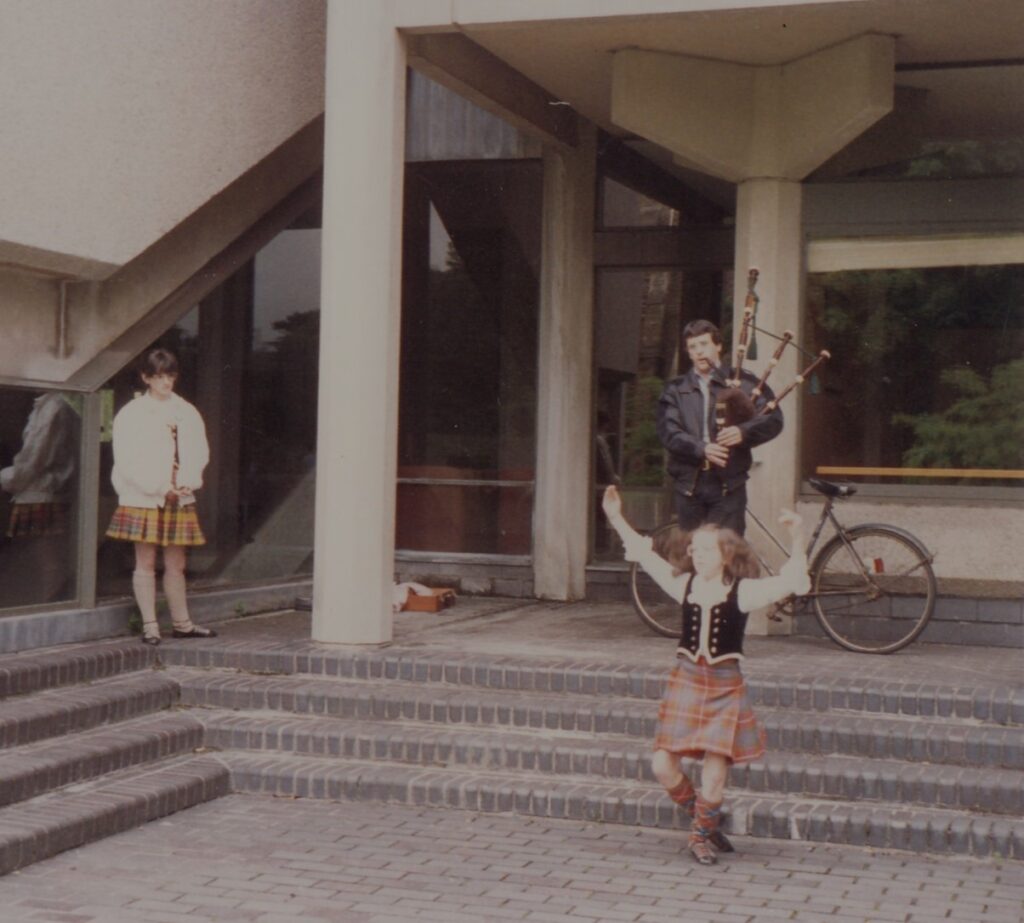
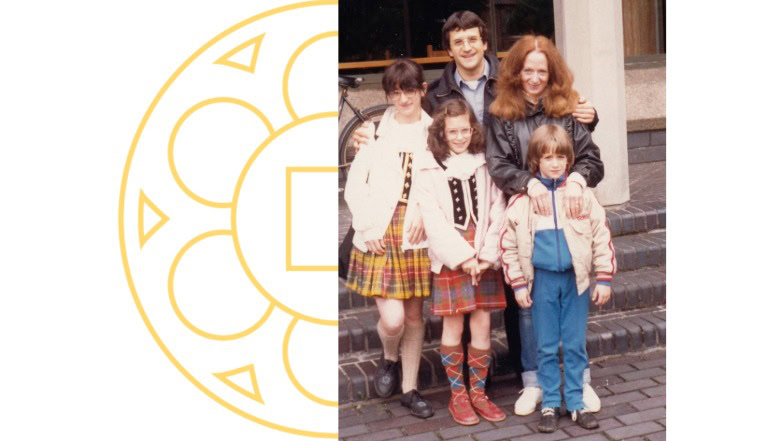
These photos were taken by Professor Kenneth Kirkwood at the annual barbeque. Ken, as you might imagine from the pictures, had a soft spot for Scotland and our culture quite generally. To my mind, his photos of me and my family capture something of Ken’s immense enthusiasm for our presence at St Antony’s.
He, and various members of staff (Dr Waswo, Mrs Flitter), not only accorded us a very warm welcome to the college, but they made certain, at every turn, that I was fully engaged in all the interesting activities of the university: seminars and debates; classes; High Table; informal discussions and natters (as we would say) over a pint or a glass of red wine. Moreover, in some of the seminars, where Norman Stone and I were the only Scots present (like Dovid Katz’s Yiddish Language series), we enjoyed the cut and thrust of being devil’s advocates for Scotland. I don’t know that Dovid Katz always appreciated what Dr Johnson often referred to as that ‘sarcastical Scotch wit’, but, in fact, at the end of the final session, he certainly thanked Norman and myself for enlivening the discussion.
Lord Goodman was, no doubt, less sanguine about my needling when he presented a lecture on images of the Jew in ‘British literature’, and I countered his thesis with several references to positive images of the Jew in Scottish literature (eg images from the works of Smollett, Scott, Spark). I have to say that quite a socially-mixed audience kept encouraging me to continue the debate – in a very good-natured way. If all this makes me sound narrowly nationalist, I apologise.
In fact, the St Antony’s experience taught me so many positive and invaluable things about England and English culture; European and international culture, etc that I carry with me to the present day. I would still like to return to St Antony’s to deliver a lecture (or series of lectures). In recent times, I lectured at Cambridge, and that was grand. But, Ken Kirkwood and his colleagues have left me with a soft spot for St Antony’s.
An Antonian Ghost Story
Angelina Gibson (Senior Common Room, 2002-2022)
On a fine Saturday in early May 2026 I had lunch at Hertford College and sat next to the Very Rev’d Dr Jeffrey John, who used to be the Dean of Magdalen. When I told him about my connection with St Antony’s, he asked me if I knew about the College ghost. This immediately piqued my interest!
In the winter of 1990, when I started work in the New Bodleian, I had a ghostly – and ghastly – encounter in the Radcliffe Camera underground tunnel, which connects several Bodleian libraries. I still remember the heavy steps behind me and the freezing breath down my neck. We had a register for recording such incidents, the most disturbing of which was the sighting of a pair of disembodied legs running around the Divinity School.
Dr John told me that one day the Warden, Baron Ralf Dahrendorf, rang him and asked him to exorcise a ghost, who was terrifying the Visiting Fellows residing in the old building, formerly a 19th century Convent School of the Sisters of the Society of the Holy and Undivided Trinity. Classic poltergeist signs and sounds. The academics never overlapped or met each other, but reported the same paranormal activity: flickering lights, slamming doors, moving objects (mostly books), and a spooky cackle.
Dr John, who already had a reputation as a local ghost-buster, readily agreed and spent some time in the rooms reading the Prayer for the Dead, which seemed to do the trick. Peace and tranquility returned to the hallowed halls of St Antony’s, and the Visiting Fellows stopped demanding to be moved to alternative accommodation. The relieved Warden invited him to a lavish dinner as a gesture of gratitude.
We concluded that it must have been a disgruntled nun, who, after a boring life in the Convent, decided to have some fun in the afterlife!
Perhaps this true story could become a fundraising opportunity? Or a themed summer ball…’The Naughty Nun and the Ghost-buster’?
‘Sister Antonia’ would be amused…
‘You Scobberlotchers!’
Baqer Moin (Senior Associate Member, 1985)
It was the winter of 1986, and I was dining at High Table with a group of dons and friends whose combined knowledge of languages could probably have translated the Bible before dessert. The wine had flowed generously, the port was making its traditional rounds, and the conversation had reached that stage of linguistic one-upmanship.
When my turn came to contribute a word, I dug deep into memory and produced a gem from my old classical Arabic teacher in Mashhad, the formidable Adib Nishabouri — a man who could juggle words the way others juggle walnuts or oranges. He once told us the story of a weary Bedouin surrounded by an over-curious crowd of young men. Fed up, he snapped in magnificent, archaic Arabic:
«ما لَكُم تَكأكأتم عَلَيَّ كَتَكأكُئِكم عَلَى ذي جِنَّةٍ، افرَنْقِعوا عنِّي»
‘What aileth you, that ye have beswarmed about me as men beswarm about one possessed? Avaunt ye, and franckle yourselves from me!’
It brought joy and laughter to the table. And just when I thought the evening could not get any more obscure, the head of the High Table stood up, glanced at his watch and announced, ‘Gentlemen and ladies, it is time for me to depart — you scobberlotchers!’
I was utterly bamboozled. Scobber-what? It was too late (and perhaps too much port had been consumed) to ask. The next morning, still curious, I turned to an English dictionary, which said something like this: a scobberlotcher is an idle Oxford student, loafing in the college garden and counting the trees over the wall in the next college.
That how I did my research at St Antony’s on my book on the Iranian revolution and the life of Ayatollah Khomeini.
Meeting my Tutor
Barry Gills (Associate Member, 1984)
I fondly remember my first days at St Antony’s College in late 1984. I was introduced to Professor Adam Roberts (International Relations) who was my personal tutor at the college. I remember causing a bit of a stir one evening at a college symposium on war and the causes of war. I stood up and made a comment, citing Martin Wight, that the cause of war lay in the existence of a system of states. I was met by loud vocal disapproval from some of the audience…
Professor Roberts later chastised me a bit…but much more comfortingly in style.
The first illustrated College leaflet
In 1983, the College decided to produce its first illustrated promotional leaflet. It had identified the need for a College brochure ‘to give a general view of the nature of the College’ which should be ‘attractively printed’. A combination of text and colour photos, it was chiefly aimed at prospective students, but designed to be of interest to others, such as visitors to the College.
Originally conceived as a much larger, glossy, booklet, high production costs meant that it had to be scaled down to a single-sheet leaflet. But the leaflet packs a lot into its small size. Prospective members are given a range of information about the College: its history, membership and degree courses. The photographs, taken by Thomas Photos of Oxford, give a real flavour of life at St Antony’s in the early 1980s and include some great shots of the College grounds and buildings, some of which look very different today.
Click the four-arrow icon on the right underneath the leaflet to expand it to full screen.
Internment in Scottish alien prisoners’ camp did not happen…
Celia Szusterman (DPhil Politics, 1986)
On April 2nd 1982 the Argentine military junta, in all its lack of wisdom, decided invading the Malvinas Islands (Falklands) was a brilliant idea to cap its murderous six years in government. Surely all atrocities would be forgiven by a rapturous, grateful population? Well, it did not turn up quite like that.
On April 3rd 1982 I received a telephone call from the Warden, Sir Raymond Carr. After reading the leader in The Times that morning, where there was speculation about possible consequences should there be a formal declaration of war between Argentina and the UK, he wanted to reassure me. ‘If you are interned as an enemy alien somewhere in Scotland, I shall come to visit you and bring cigarettes.’ When I thanked him but regretted to say I didn’t smoke, his reply was quick: ‘Oh well, then I shall bring apples.’
Fortunately there was no declaration of war, I did not become an enemy alien, and Raymond did not have to travel to Scotland carrying apples.
Anecdotes
H B Paksoy (DPhil Oriental Studies, 1982)
This is a series of anecdotes written by H B Paksoy about his time at St Antony’s, including the unexpected ramifications of his wardrobe choices, the x-ray vision of the Lodge Porters, and how he unwittingly ended up on Spanish television (and much more).
Click the four-arrow icon on the right underneath the document to expand it to full screen.
When the College first opened, there were too few students and fellows to play many sports other than tennis. In the early 1950s two tennis courts were built in the College garden next to the main building. From that point on they became a popular feature of the College campus. Speaking in 1999, a former member of staff of the Bursary (which at that date was a small temporary hut in the middle of the College grounds), recalled that in the early 1950s lots of the fellows and staff, including the Bursar and College Secretary, played tennis during their lunch hours. Sometimes well into the afternoon. Every summer there was a garden party at which the College tennis championships took place.
In 1955 a squash court was built next to the tennis courts. Both served many cohorts of students and fellows until the 1990s when the Nissan Institute and Founder’s Building were built. These required the demolition of both the tennis and squash courts. College tennis continued for a while after the loss of the courts. St Antony’s tennis teams played on the University Club’s tennis courts and on 3 June 2000 the first annual ‘Goulding Cup’ tennis championship was held, named after the Warden at that time, Sir Marrack Goulding. A student-fellows mixed doubles tournament, it was held to combine ‘the joys of tennis’ with increased student-fellow interaction.
The photo shows the College gardens and tennis courts in c1987.
The photograph at the top of this page has been reproduced by kind permission of Gillman & Soame photographers and can be ordered online here.