‘A slightly rash experiment’: the St Antony’s 1962 Conference on ‘Britain and European Resistance, 1939-45’
In December 1962, St Antony’s became the venue for a major eight-day conference on ‘Britain and European Resistance, 1939-45’. Until recently, the only known documentation surviving from the conference were bound sets of typewritten conference proceedings, placed in the College Library. No correspondence relating to the event could be found. It was perhaps surprising that so few records had survived of such a large event.
Recently, however, a number of boxes of files were found in a College storeroom which had not been opened in several decades. On doing so, it was discovered that they contained papers of the College’s first Warden, Sir Frederick William Dampier (‘Bill’) Deakin, relating to his personal organisation of this conference and the subsequent publication of its proceedings.
In March 1961 Deakin had attended the Second International Conference on the History of European Resistance in Milan and given a paper on ‘Great Britain and European Resistance’. Deakin and a number of his fellow attendees at the conference decided that more detailed investigation of Britain’s attitudes to resistance forces was needed. Deakin decided to host a conference at St Antony’s on what he saw as ‘an important and neglected subject’. He regarded the College as the perfect venue: as a French foundation, it was a ‘neutral enclave’, ‘barely British territory’.
The conference was held at St Antony’s from 9 to 16 December 1962. The subject was, specifically, relations between the British government and resistance groups in occupied Europe during the years of the Second World War. The aim was to try to seek contributions from those with first-hand knowledge, or specialist academic study of the subject, from each country with whose resistance movements Britain had been involved.
For each country, speakers were invited by Deakin to give both the British perspective and the view from the country concerned. Speakers were either historians or someone who had participated in the events under discussion. The British speakers were selected from those who had served in the government, civil service, army or the Special Operations Executive (SOE) during the war.
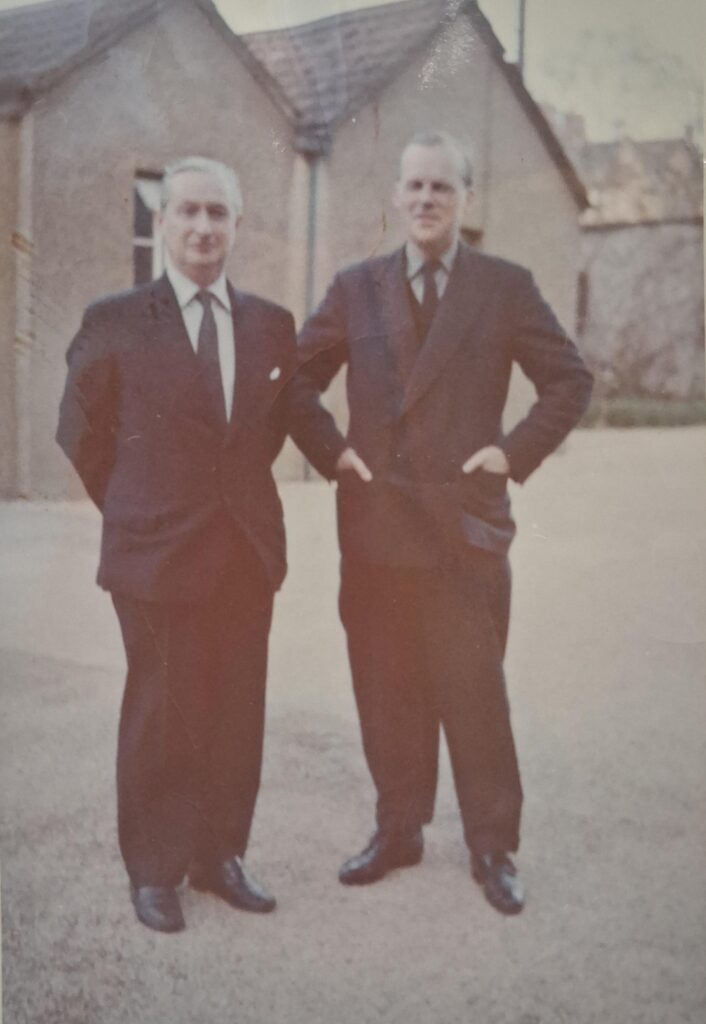
The countries under discussion were France, Belgium, Holland, Denmark, Norway, Poland, Czechoslovakia, Albania, Yugoslavia, Italy and Greece. Deakin gave the paper on Britain and Yugoslavia, having been in the Special Operations Executive himself during the war. In 1943 he had parachuted into occupied Yugoslavia to meet Tito, leader of the resistance movement there.
The format of the conference was that each day was devoted to the discussion of one or two particular countries. For each country, a paper on the British perspective was given first, followed by a paper from the country concerned. The session then finished with a free discussion to which any in the assembled audience were welcome to contribute.
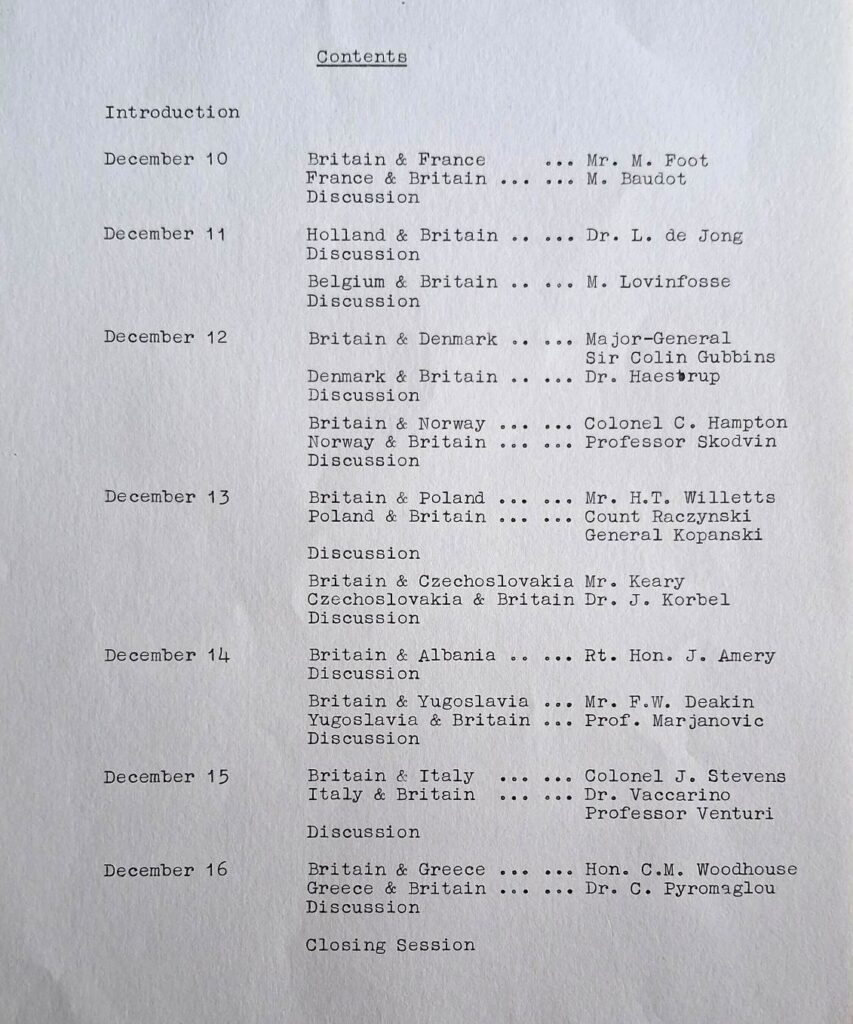
Most of the countries under discussion sent speakers to the conference, with the exception of Albania, Belgium, Czechoslovakia and Poland. Guests from the Federal German Republic, USSR and the USA were also invited as ‘observers’ to the conference. Although they were not permitted to give formal papers, they could participate fully in the discussions which followed.
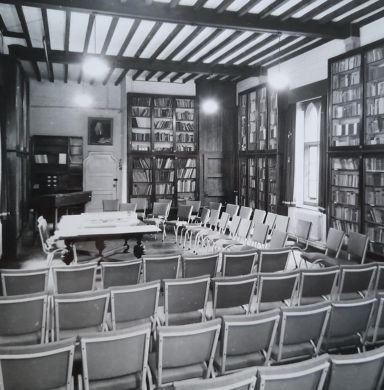
The conference was held in the College Seminar Room; what is now the Russian Library in the Old Main Building. The proceedings were recorded onto tape, and from these, transcripts were made. These were edited by Bill Deakin personally, with assistance from Harry Willetts, director of Russian and East European studies at St Antony’s. The proceedings were bound and two copies deposited in the College Library.
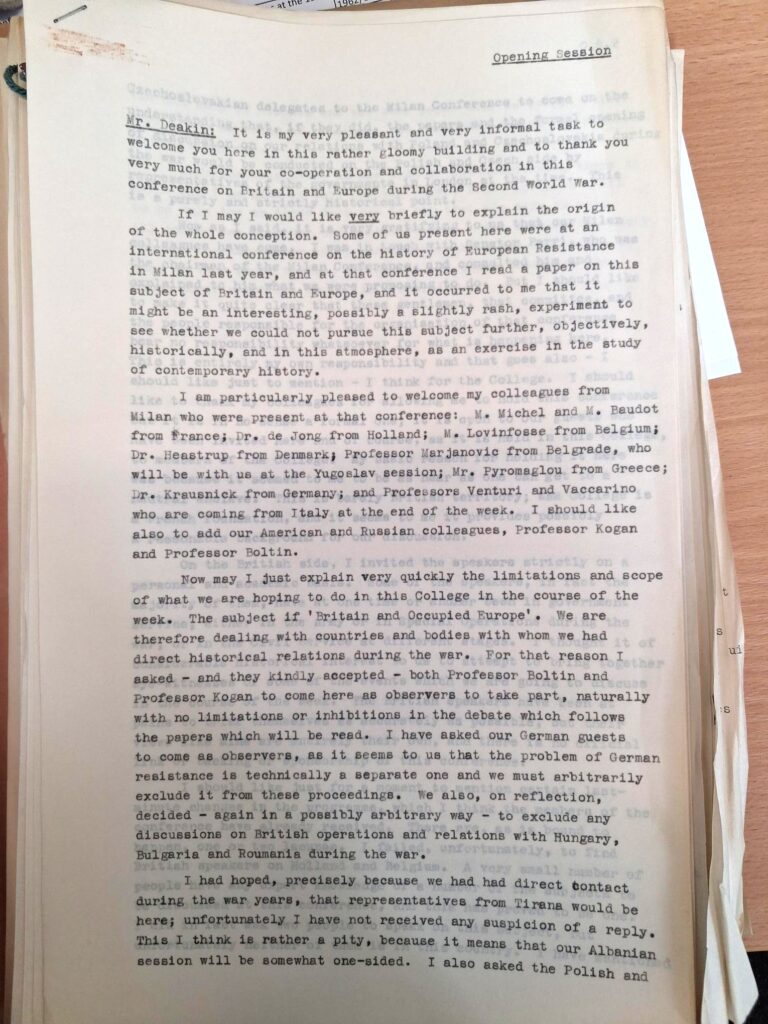
Amongst the papers recently discovered, alongside additional copies of the conference papers and proceedings, are drafts of the papers and discussions, including unpublished transcripts of Bill Deakin’s opening and concluding speeches.
The papers also include Deakin’s correspondence inviting speakers to the conference and feedback he received from those who attended. The papers are a fantastic discovery and will add much more to our knowledge of this significant event in the history of the College.